
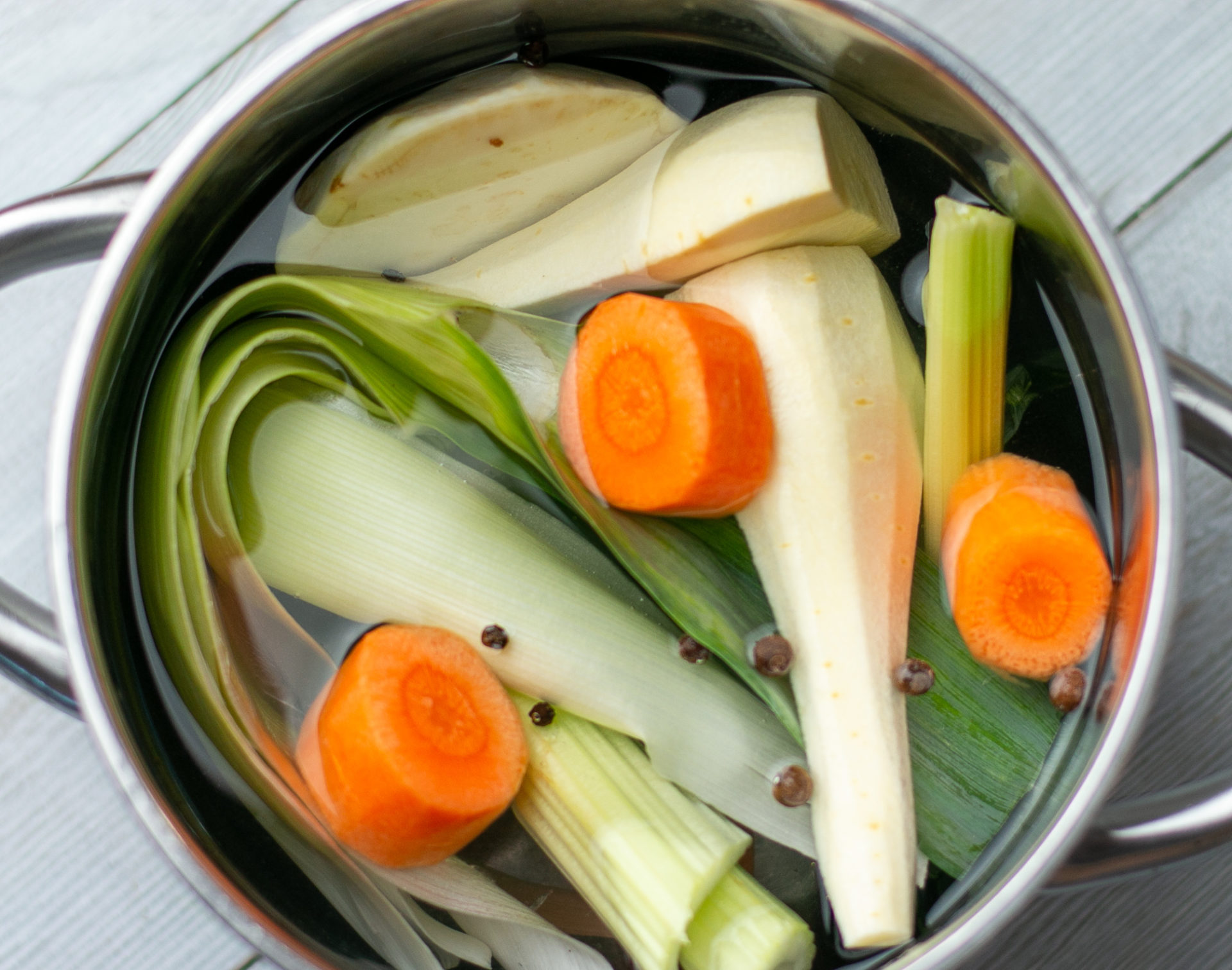
A quick vegetable broth is always helpful in the kitchen when you make soups, creams, how you make risotto, and many other dishes. How to make it aromatic and vegetables to give up all their flavor to the stock. There are a few Trockes that my grandmother also taught me. So if you want to know her secrets, I invite you.
How to choose the best ingredients for the Perfekt Vegetable Broth
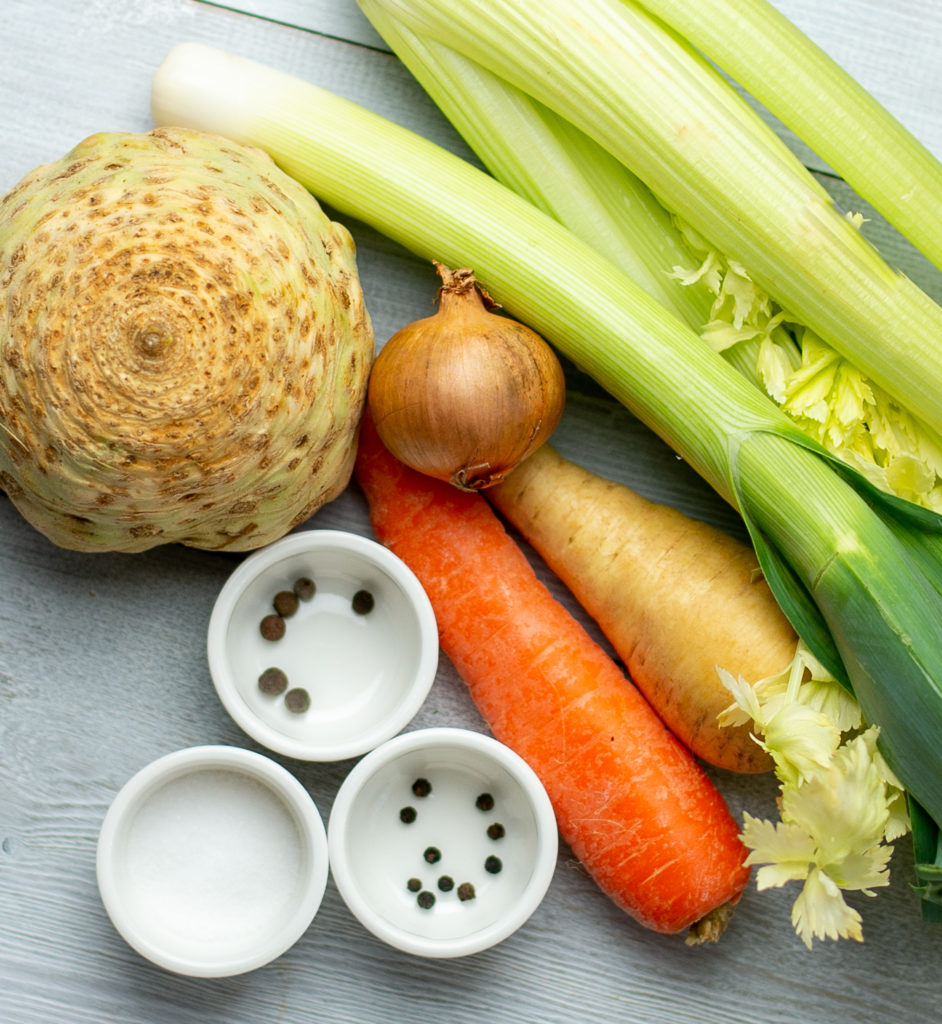
Carrots: carrots are one of the basic vegetables that are added to a vegetable broth, it gives it flavor and aroma, but if you overdo it, the broth will be too sweet. For 2 liters of water, it is optimal to give two medium-sized carrots.
Parsley root: parsley root or parsnip is like a completely different vegetable, parsnip is sweeter and caloric, but it can be replaced.
Bunch of parsley: a bunch of parsley: parsley adds flavor. Even though we add parsley root, it is also worth adding about 5-8 twigs.
Celeriac/ Celery: celeriac is a vegetable similar in taste to celery, but I would not replace one with another. You can do it when you don’t have a celery root, but if you have the option to make a vegetable broth full of flavor, add it as well. In addition, celery gives a salty aftertaste, so the more different in this matter, the better.
Leek: for me, a vegetable leek is the queen of vegetables in itself. I love it when rubbed, as an addition to soup or to prepare a cream soup from it. It cannot be missing here as well.
Peppercorns: peppercorns give a spiciness. If you like spicier flavors, do not spare. You can add a few more too.
Allspice: allspice, apart from the sharpness, adds a characteristic earthy aroma. It should not be omitted if you want a very aromatic vegetable broth.
Onion: onion is a very intense vegetable in its flavor and aroma. In preparing vegetable stock, the bite is of particular importance, additionally with dry caramelizing. Well, caramelized onion is supposed to be almost black on the outside. So please do not be scared. It does not hurt. On the contrary, it will add soil to our vegetable stock.
White cabbage: white cabbage leaves can be a variation on vegetable broth, if you have it, you can add them, but they are not necessary. They are not recommended for everyone because they can cause unpleasant stomach ailments. It can be omitted without much prejudice.
Apple: the apple will give your broth juiciness and sweetness, it is not necessary, but it is worth taking care of it in the vegetable stock. The apple must be sour. My grandma did not always add it, but the apple was sour when it was.
Tips and tricks
- You can make more vegetable broth and when it is fresh, freeze it in bags or in containers.
- Sometimes when you need only the same parsley and you are left with only green twigs, because they are thick and hard, to use them in a dish, it is worth trying them with a white thread and using them for vegetable broths.
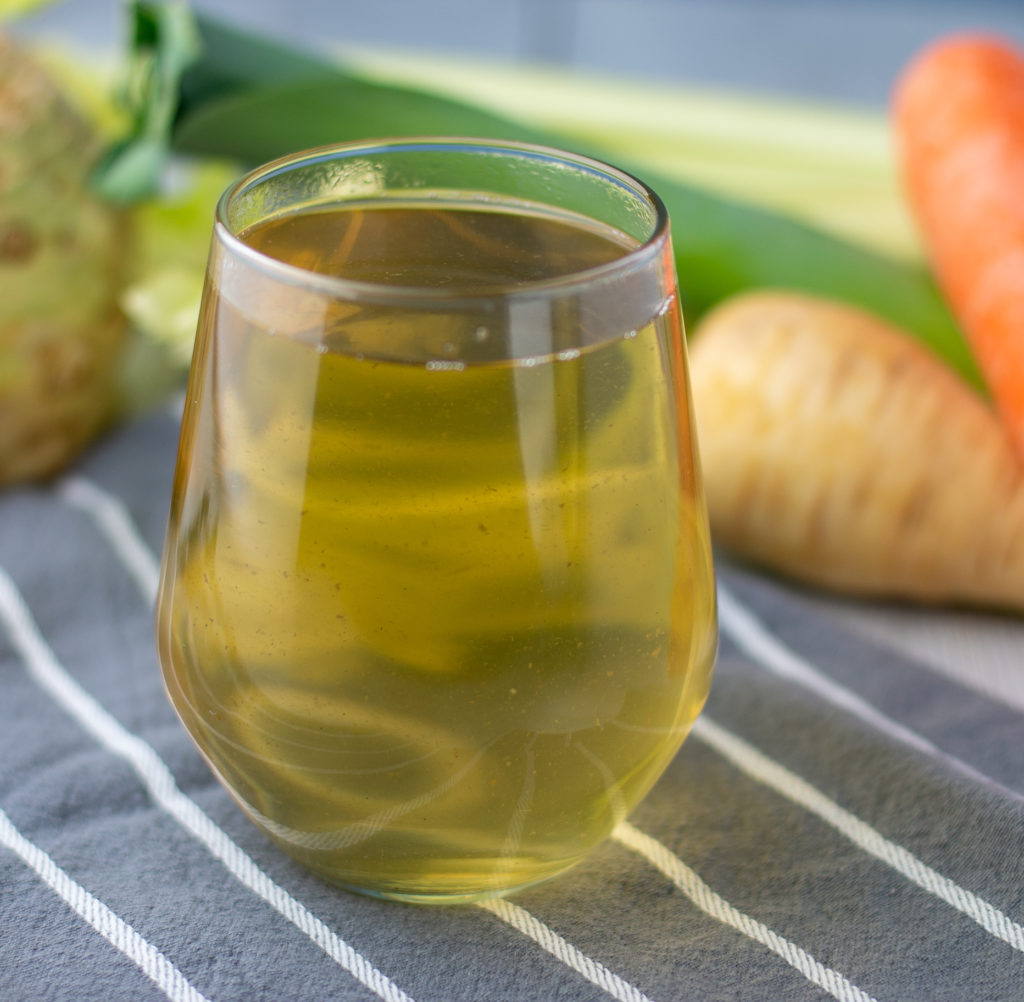
Perfekt Vegetable Broth
Ingredients
- 2 liters water
- 2 carrots
- 1 parsley root
- 1/2 bunch of parsley
- 1/6 pieces celeriac
- 2 leaves celery
- 3 leaves leek
- 4 peppercorns
- 3 allspice
- 1 small onion
- 1/2 tbsp salt
- 2 leaves white cabbage
- 1 sour apple